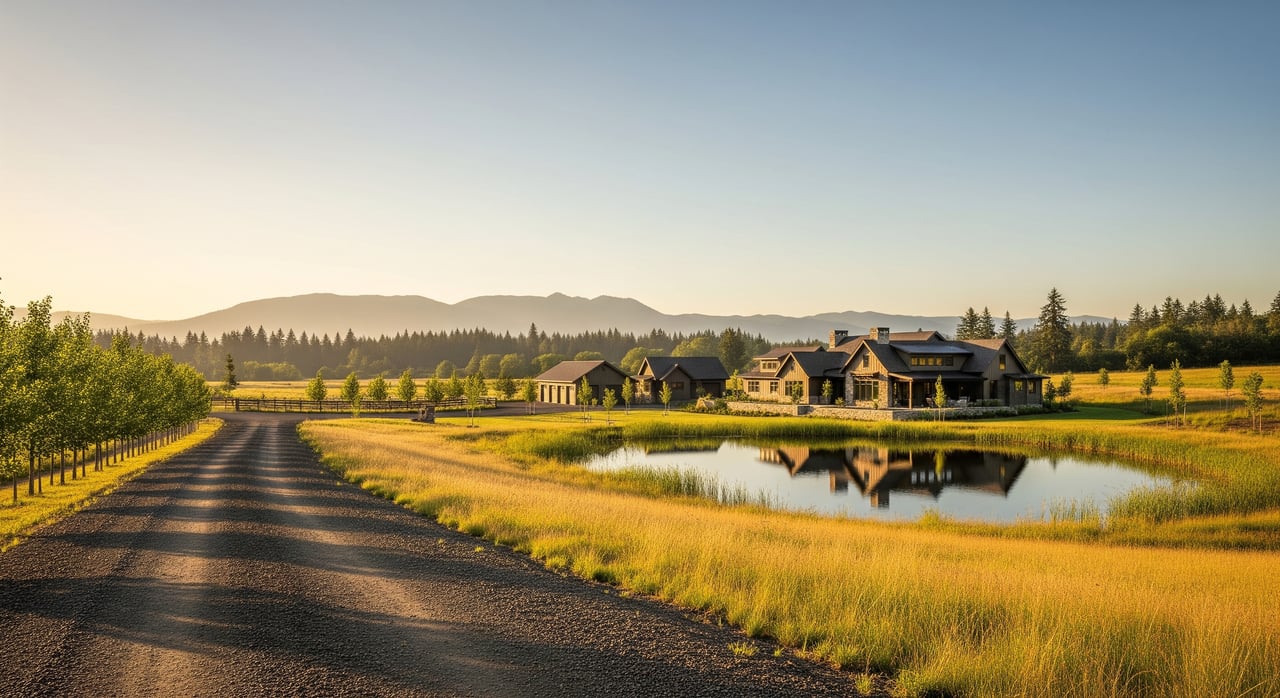
Buying Acreage Near Ridgefield: Key Checks Before You Commit
February 5, 2026
February 5, 2026
Picture your morning coffee with open sky, tree lines, and room to roam. Buying acreage near Ridgefield can deliver that lifestyle, but it comes with a different set of checks than a typical subdivision home. You want freedom and privacy, and you also want to avoid costly surprises. In this guide, you’ll learn the key items to verify for wells, septic, access, zoning, critical areas, and timelines so you can move forward with confidence. Let’s dive in.
Acreage near Ridgefield spans incorporated city limits and rural Clark County. Many parcels rely on private wells and septic, and some include wetlands, streams, or floodplain areas. Private roads and longer utility runs are common. Each of these factors affects cost, timeline, and financing.
Your goal is simple: confirm what you can build, how you will get utilities and access, and what environmental rules apply before you write an offer. The agencies listed below are the primary sources to verify the details.
Start with parcel zoning and land use designations through Clark County Community Development. If the property sits within Ridgefield city limits or within the city’s service area, contact the City of Ridgefield planning and building departments. Clark County Public Works can clarify road access classifications and driveway permits. For septic records, contact Clark County Public Health.
If you plan to keep animals or operate a small farm, confirm that the zoning allows your intended use and any animal unit limits. County rules and development standards vary by zone, and setbacks can influence where structures or enclosures can go.
Many rural parcels use private wells. Washington’s Department of Ecology administers water rights and rules for groundwater withdrawals. Even when a domestic well qualifies under permit-exempt provisions, wells can be curtailed in some areas or during adjudications.
Low yield, seasonal declines, or contamination can occur due to surface runoff, nearby septic issues, or agricultural activity. Older casings may need upgrades. Confirm any water availability concerns with the Department of Ecology early in your process.
Clark County Public Health oversees on-site sewage system permits, designs, and inspections. System type and soil conditions drive long-term performance and replacement costs.
Require a site evaluation and soils review to determine feasibility and system type. Installation costs vary with soil, slope, and design. Engineered or pressurized systems are often more expensive than conventional systems.
Lenders expect recorded legal access. Some acreage sits on private roads or minimally maintained county roads, which may affect financing, maintenance, and insurance.
Electric service for much of Clark County is provided by Clark Public Utilities. Extending power to a homesite can add time and cost. Natural gas is limited in rural areas, so many owners use propane or electric heat pumps.
Broadband and cellular coverage can be patchy on acreage. Check availability and speed from providers such as Comcast/Xfinity, Frontier, local co-ops, or Clark Public Utilities broadband (if applicable), and verify cell carrier coverage. Confirm trash service and mail delivery type for the address.
Clark County enforces a Critical Areas Ordinance that covers wetlands, streams, floodplains, geologic hazards, aquifer recharge, and fish and wildlife habitat. If wetlands are present, you may need a wetland delineation by a qualified professional. Buffers and setbacks can reduce the buildable area or require mitigation.
Check FEMA and Clark County floodplain maps to confirm if any portion of the parcel lies in a 100-year or 500-year floodplain. Floodplain areas carry special building standards, may affect septic siting and elevation, and can require flood insurance.
Parcels near streams that support salmonids or near the Ridgefield National Wildlife Refuge may be subject to additional habitat protections. Some projects may require coordination with Washington Department of Fish and Wildlife or the U.S. Fish and Wildlife Service.
Use the NRCS Web Soil Survey and, where needed, a geotechnical review to evaluate percolation, restrictive layers, shrink-swell potential, and slope stability. Steep slopes or challenging soils can drive up foundation and drainage costs. If mature timber is present, understand local clearing rules, and if commercial harvesting is planned, confirm any state forest practices requirements.
Most lenders want proof of a functional water source and septic, recorded legal access, and insurable title. Shared wells, long private roads, and unrecorded easements can complicate underwriting. Some buyers use USDA Rural Development loans when properties and borrowers meet eligibility criteria.
If any portion of the parcel is within a mapped floodplain, a lender may require flood insurance, which you can obtain through the National Flood Insurance Program or the private market. Wildfire exposure, defensible space, access for fire apparatus, and water supply may influence premiums.
Plan for lead times. Building permits, septic approvals, well work, driveway permits, and any critical area reviews or mitigation can add months to your timeline. Line up the right professionals early:
Use this list while touring and before you commit:
Buying acreage near Ridgefield rewards careful due diligence. We guide you step by step, connect you with the right local experts, and keep the process on schedule. Our team is experienced with rural and land transactions, from well and septic coordination to surveys, critical areas review, and road and access verification. We bring an educator’s mindset to every decision so you feel informed and in control.
Ready to explore acreage with clarity and confidence? Connect with Wings NW Real Estate to schedule a strategy call and get a tailored plan for your goals.
A Northwest Tradition Worth Discovering



Camas Plein Air

work with us
Ready to love where you might land next? Contact us!
19363 Willamette Dr #161 West Linn OR 97068 701 NE 136th Ave, 2nd Floor Vancouver, WA 98684