A Guide to Portland Home Architectural Styles
July 9, 2026
July 9, 2026
Ever stood on a Portland street and wondered why one block has a bungalow, a Tudor-inspired cottage, and a sleek newer build all side by side? You are not alone. If you are buying, selling, or simply trying to understand what gives Portland homes their character, learning the basics of local architecture can help you read a property more clearly. Let’s dive in.
Portland’s older neighborhoods were heavily shaped by the streetcar era. As residential areas expanded along street railway lines, neighborhoods such as Irvington, Laurelhurst, Ladd’s Addition, and South Portland developed with easy transportation access and a strong early twentieth-century identity.
That history helps explain why Portland rarely feels architecturally uniform. Instead of one style per neighborhood, you often see layers of home design from different periods built close together. In practical terms, that means the house you love may not fit neatly into a single label, and that is perfectly normal in Portland.
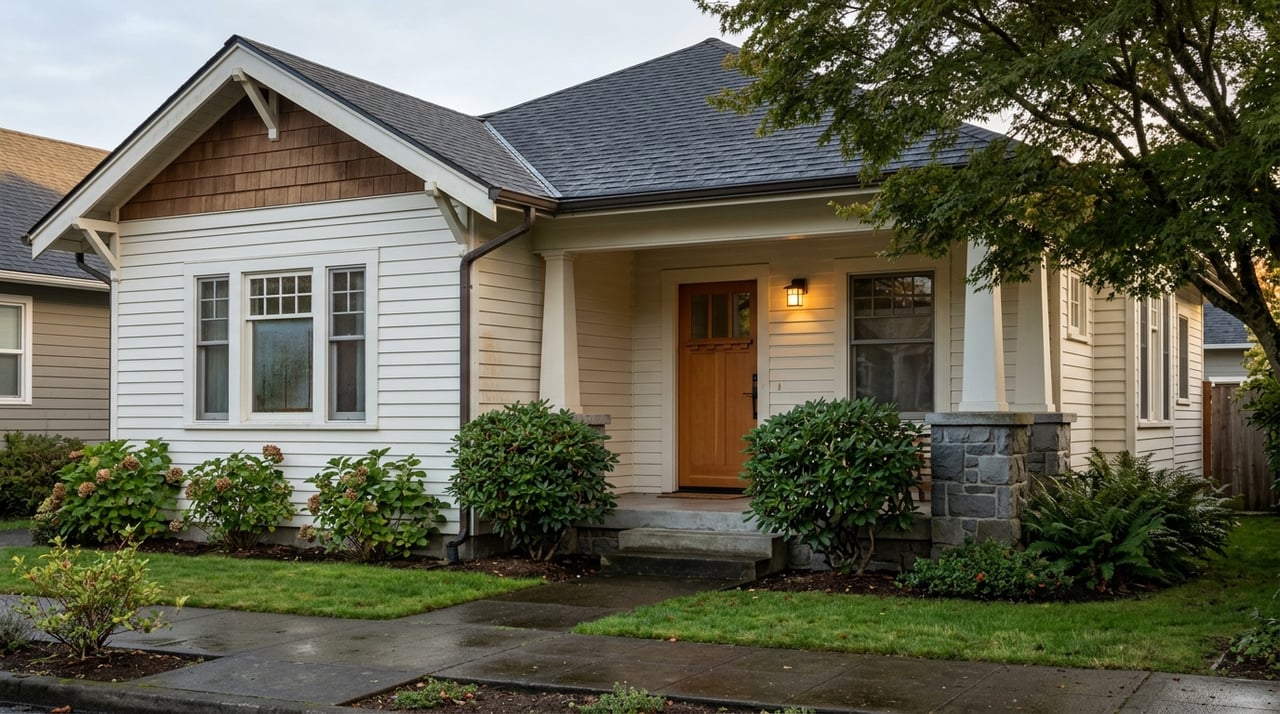
If there is a home style that feels especially tied to close-in Portland, Craftsman and bungalow homes are strong contenders. These homes are common in older streetcar neighborhoods and are often easy to recognize from the curb.
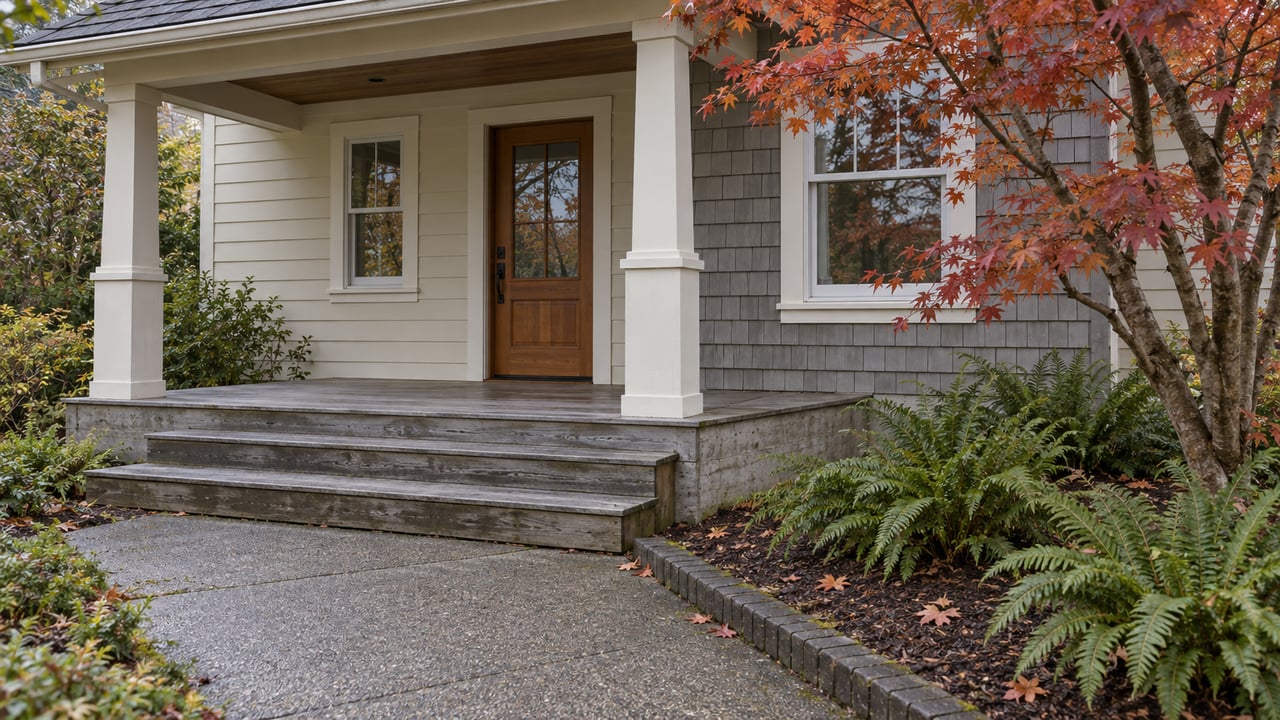
Look for features like low-pitched gable or hipped roofs, wide overhanging eaves, exposed brackets, shingle siding, and porches supported by tapered posts. Many are one to one-and-a-half stories, with a compact footprint, broad rooflines, and a porch-forward feel.
Inside, these homes are often associated with open layouts for their era and warm wood details. The overall impression is less formal and more inviting, which helps explain why they remain popular with Portland buyers.
You can find concentrations of Craftsman and bungalow homes in Irvington, Laurelhurst, southern Ladd’s Addition, and South Portland. Laurelhurst is especially noted for Arts and Crafts, bungalow, Portland Foursquare, and Spanish Revival homes, while southern Ladd’s Addition developed as a bungalow neighborhood in the 1920s and 1930s.
Portland’s older neighborhoods also include smaller but important pockets of Prairie, Queen Anne, and related revival styles. These homes add another layer to the city’s architectural mix and can feel quite different from the typical bungalow.
Prairie School homes usually look low, horizontal, and grounded. Common features include low-pitched hipped roofs, wide eaves, grouped casement windows, and brick or wood materials.
Queen Anne homes, by contrast, are part of Portland’s older residential fabric and often appear in historic districts alongside Italianate, Colonial Revival, Tudor, and English Cottage influences. In Portland, the key thing to know is that these categories often overlap, especially in established neighborhoods.
In districts like Irvington, homes frequently combine features from several architectural traditions. You might see a house with a broad porch and Craftsman detailing, but with revival elements that blur the label. For buyers and sellers, that means style should be treated as a helpful guide, not a rigid rule.
Not every classic Portland home is pre-war. If you prefer cleaner lines, more glass, and a more open feel, mid-century modern and ranch-era homes are a major part of the local housing story.
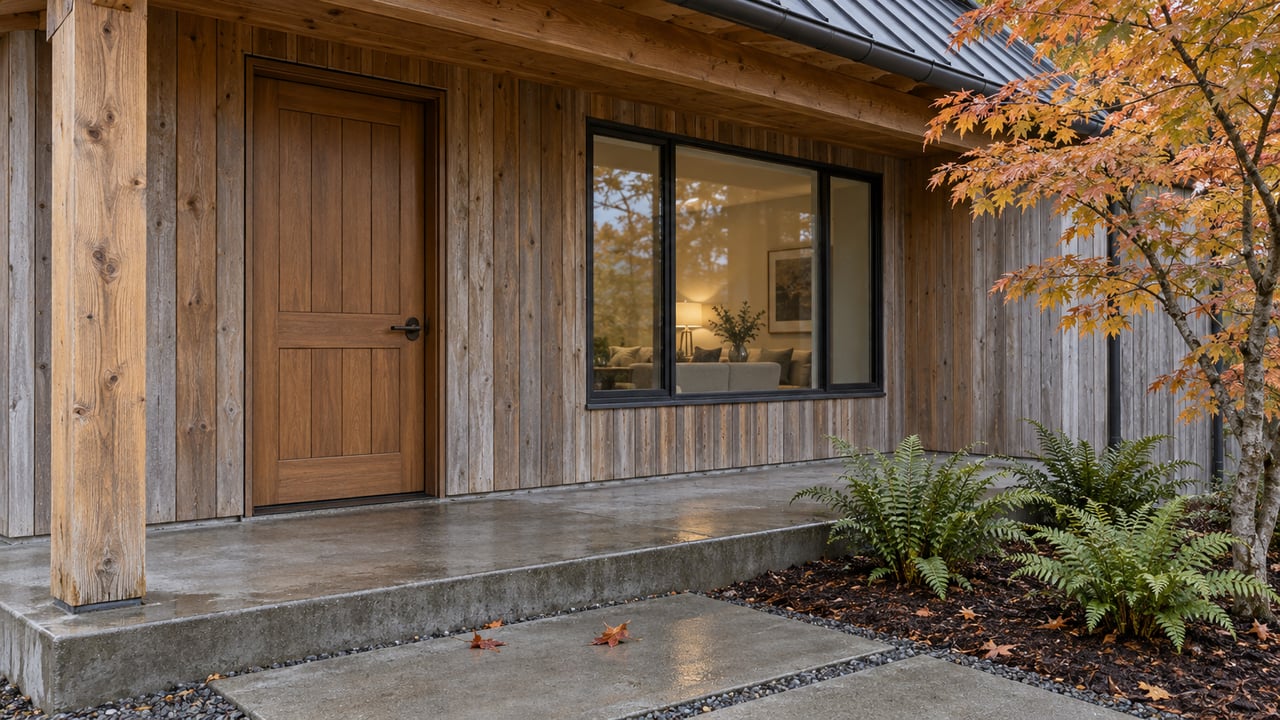
Mid-century modern homes tend to have long, low profiles, broad openings, minimal ornament, and an emphasis on natural light. The look is more streamlined than earlier styles, with a stronger focus on openness and efficiency.
Ranch homes share some of that low-slung profile, while smaller Cape Cod bungalows from the 1940s and 1950s bring a more compact and traditional shape. These homes often appeal to buyers who want a different feel from Portland’s porch-heavy early twentieth-century stock.
Eastmoreland and the Reed area are two good places to start if you are searching for mid-century architecture. Eastmoreland includes one of Portland’s larger concentrations of mid-century modern homes, while the Reed neighborhood includes small Cape Cod bungalows from the 1940s and 1950s as well as modern ranch homes.
Farther east, Parkrose and Argay are also associated with mid-century housing. Argay, in particular, is described in city materials as a neighborhood with mid-century houses.
Some of Portland’s newest homes do not match a historic style at all, and that is where contemporary infill comes in. This category is less about ornament and more about how a building fits its lot, block, and zoning context.
Portland allows ADUs, duplexes, triplexes, fourplexes, and cottage clusters in many residential areas, with rules intended to keep size and scale compatible with surrounding homes. Infill is especially common in inner neighborhoods and near centers, corridors, and transit, though middle-housing opportunities have also expanded in some outlying areas and the West Hills.
When you look at newer infill in Portland, focus less on whether it “looks historic” and more on how it sits on the lot. Pay attention to massing, setbacks, and overall scale. Portland’s design system is built around compatibility with the surrounding block, not exact imitation of older architectural styles.
If you want to understand Portland architecture quickly, it helps to think in geographic patterns. Some neighborhoods are strong examples of the streetcar era, while others are better known for mid-century housing or newer infill.
Here is a simple way to think about it:
| Area | Styles Commonly Seen |
|---|---|
| Irvington | Craftsman, bungalow, Prairie, revival-style mixes |
| Laurelhurst | Arts and Crafts, bungalow, Portland Foursquare, Spanish Revival |
| Ladd’s Addition | Early residential mix, especially bungalows in southern blocks |
| South Portland | Queen Anne, Italianate, Craftsman, bungalow |
| Eastmoreland | Mid-century modern concentrations |
| Reed | Cape Cod bungalows, ranch, mid-century-era homes |
| Parkrose and Argay | Mid-century homes |
This kind of map can be useful if you are narrowing a home search by style. It can also help sellers frame their home more accurately when preparing to list.
Style is more than curb appeal. In Portland, architecture can affect maintenance, renovation plans, and how you think about the long-term fit of a property.
Older homes often use a great deal of wood, and wood responds to moisture. Oregon State University notes that wood gains and loses moisture as conditions change, which can lead to shrinking, swelling, paint adhesion issues, and greater vulnerability to decay and insects if moisture is not well managed.
If a home has wood shingles or shakes, maintenance methods matter too. Aggressive power washing can damage the surface, while a water repellent with a UV inhibitor is identified as a safer care approach.
If a home is located in a Historic District, Conservation District, Landmark, or similar protected area, exterior changes may trigger Portland’s historic-resource review process. That can apply to alterations, additions, new construction, and demolition.
This is especially relevant in places like Irvington, Laurelhurst, Ladd’s Addition, and South Portland, where historic protections can shape what an owner is allowed to do. If you are buying with renovation plans in mind, this is worth understanding early.
If you are preparing to sell, understanding your home’s style can help you position it more clearly. Buyers often respond to a home more confidently when its architectural story is easy to understand and its key features are presented well.
For example, a bungalow buyer may be drawn to original porch details, rooflines, and woodwork. A mid-century buyer may care more about natural light, horizontal lines, and openness. Knowing what your home communicates can help shape staging, marketing, and buyer expectations.
At the same time, it helps to stay flexible. Many Portland homes are hybrids, so the goal is not to force a perfect label. It is to describe the property honestly, highlight what makes it distinctive, and guide buyers through what matters most.
If you are buying or selling in Portland and want help interpreting a home’s style, neighborhood context, or renovation considerations, Wings NW Real Estate can help you navigate the details with clear, local guidance.

A Northwest Tradition Worth Discovering



Camas Plein Air
work with us
Ready to love where you might land next? Contact us!
19363 Willamette Dr #161 West Linn OR 97068 701 NE 136th Ave, 2nd Floor Vancouver, WA 98684