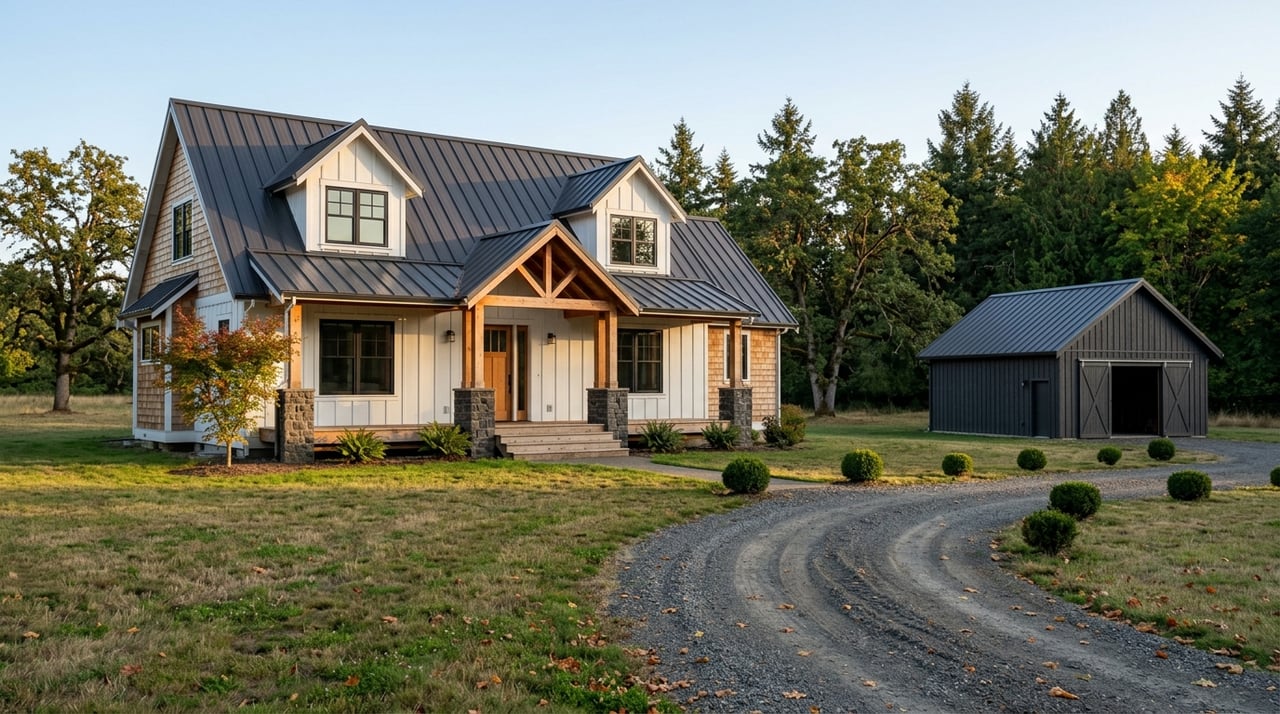
Canby Or Wilsonville For Acreage? Key Factors To Weigh
July 16, 2026
July 16, 2026
If you want acreage near the Portland metro, the real question usually is not whether you can find land. It is whether the land fits the life you want to live. When you compare Canby and Wilsonville, you are really comparing two different day-to-day experiences, two different land patterns, and two different due diligence paths. This guide will help you weigh the tradeoffs clearly so you can focus your search with more confidence. Let’s dive in.
For acreage buyers, Canby often feels more rural-edge, while Wilsonville feels more suburban and service-dense. That difference shows up in each city’s planning priorities, current land availability, and how the surrounding area functions day to day.
Canby presents itself as a small-town community with broad local services, larger lots, strong agricultural roots, and access to regional routes like I-5, Highway 99E, and nearby I-205. Wilsonville, by contrast, emphasizes walkable neighborhoods, connected paths, nearby services, parks, trails, shops, and restaurants, with land around the city generally framed for phased urban development.
If your ideal property includes room to spread out, Canby is often the more natural first stop. Its identity is closely tied to agriculture, agri-tourism, farm-loop experiences, and a long growing season, which supports a more land-focused lifestyle.
That does not mean Canby is remote. The city highlights practical access to I-5, Highway 99E, and I-205, so you may get a rural-edge setting without giving up connection to the broader metro area.
Another reason Canby stands out is the current acreage range. A recent land-search snapshot showed 11 listings in Canby, with examples ranging from 0.78 acre to 31.24 acres. That is only a snapshot in time, but it suggests more variety for buyers looking at hobby-farm scale, small acreage, or larger parcels.
Wilsonville can make sense if you want some land but do not want to feel far from daily conveniences. The city’s planning documents emphasize walkability, connected streets, town-center access, parks, trails, and nearby services, which points to a more suburban or urban-style environment.
For some buyers, that is the right balance. You may be able to find fringe or pocket parcels while staying closer to shops, restaurants, community services, and transit options than you would expect in a typical acreage search.
Inventory, however, tends to be tighter. A recent 97070 land-search snapshot showed 4 listings, with examples ranging from 0.85 acre to 4.54 acres. In practical terms, Wilsonville acreage often means fewer options and a smaller size range than what you may currently see in Canby.
Acreage decisions are not just about the parcel. They are also about how your week will feel once you live there.
Canby tends to fit buyers who want a small-town setting, a little more breathing room, and a stronger connection to land use and agricultural surroundings. The city’s broader lot patterns and rural-edge character can support that goal well.
If you picture gardening, hobby farming, or simply having more physical space around you, Canby may line up more naturally with that vision. It often feels more self-contained and less built-out.
Wilsonville tends to fit buyers who want easier access to services and a more connected suburban environment. Its local planning and community feedback point to strong day-to-day amenities, including parks, paths, library services, sewer service, and transit.
If you want acreage as a lifestyle feature, but still value nearby conveniences and a more polished urban-suburban rhythm, Wilsonville may feel more comfortable. The tradeoff is that the acreage experience itself is usually less expansive.
At first glance, commute times look almost the same. Census data shows mean travel times to work of 24.7 minutes in Canby and 24.4 minutes in Wilsonville.
But the route can matter more than the average. Canby is a few miles removed from I-5 and I-205, with access commonly tied to Highway 99E. Wilsonville sits directly on the I-5 Boone Bridge corridor, which can be convenient, but it also comes with traffic considerations.
ODOT reports that the Boone Bridge carries more than 126,000 vehicles each day, including about 17,000 trucks, and there is currently no funded replacement timeline. So if your schedule depends on predictable I-5 access, Wilsonville’s location can be both a benefit and a variable.
Many acreage buyers assume transit is off the table, but both areas offer more options than you might think.
Canby Area Transit provides the 99X commuter route, the free Canby Loop, and Dial-A-Ride, with connections to TriMet, the Clackamas County Shuttle, SCTD, and SMART. Wilsonville’s SMART offers fixed-route and demand-response service within Wilsonville and connections to nearby communities including Canby, Tualatin, Salem, and Portland.
If you are trying to reduce how often you drive, or you want backup transportation options, that may help narrow your search. Transit alone will not decide the best acreage fit, but it can shape your daily convenience more than expected.
This is one of the biggest acreage lessons buyers learn. A parcel can look ideal on paper and still fall short if water, septic, zoning, or legal lot status do not support your plans.
Clackamas County notes that residential development depends on both an approved sewage disposal method and a source of water. The county also says development potential can be affected by zoning and legal lot-of-record status.
Its septic guidance includes a rough rule of thumb of about one acre with public water or two acres with a well for a septic system. That does not guarantee approval, but it is a helpful reminder that simply seeing "2 acres" or "5 acres" in a listing does not tell you what the land can actually do.
If you are buying acreage in either Canby or Wilsonville, early due diligence matters. It is much easier to verify property basics before you get emotionally attached to a parcel.
Oregon’s Water Resources Department says groundwater use generally requires a permit, and landowners who construct a well must follow the state’s well-related permit, bond, and fee process unless they are licensed and bonded well constructors. The state also requires well ID labeling in transfer situations.
That means your early review should go beyond the listing photos. You will want to confirm water source, septic path, zoning, setbacks, easements, and any restrictions tied to the parcel before assuming it supports your goals.
Some buyers are not just looking for space. They want a property that may support a hobby farm, animals, an ADU, or future partition potential.
Around both Canby and Wilsonville, those questions should be confirmed carefully. Clackamas County notes that zoning rules, setbacks, easements, and farm-use or conversion restrictions can all affect what is possible.
This is where a patient, land-savvy approach matters. If you already know your long-term vision, you can use that vision to screen out parcels early instead of discovering limits later in the process.
For many acreage buyers, the choice comes down to priorities rather than price alone. Both cities can work, but they serve different versions of the acreage lifestyle.
Canby may be the better fit if you want:
Wilsonville may be the better fit if you want:
When you tour acreage, it helps to compare each property through the same lens. That keeps you focused on the factors that actually affect use and value.
Here is a practical checklist to bring into your search:
Acreage purchases reward clarity. The more specific you are about how you want to live, the easier it becomes to separate a promising parcel from one that only looks good at first glance.
If you want help comparing Canby and Wilsonville acreage with a clear, step-by-step lens, Wings NW Real Estate can help you sort through land fit, lifestyle tradeoffs, and the due diligence questions that matter most.

Camas Plein Air


work with us
Ready to love where you might land next? Contact us!
19363 Willamette Dr #161 West Linn OR 97068 701 NE 136th Ave, 2nd Floor Vancouver, WA 98684