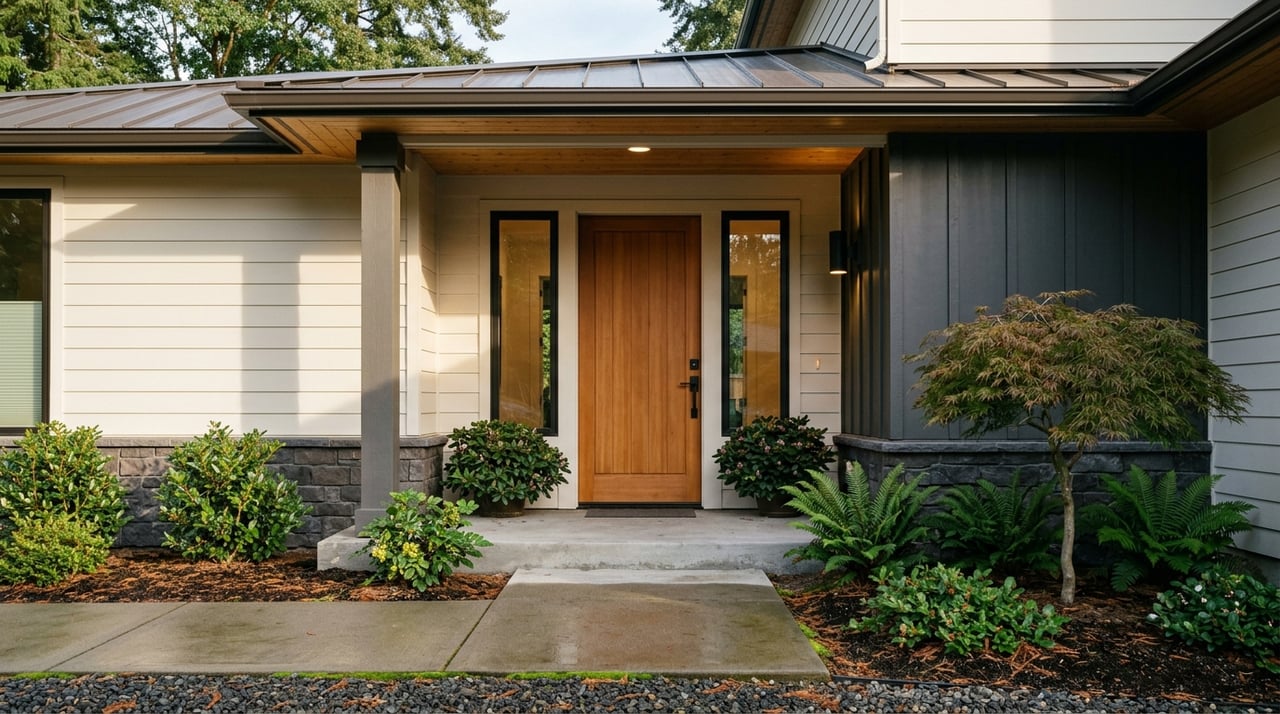
Your Roadmap to Move From Portland to Vancouver WA
June 18, 2026
June 18, 2026
Thinking about leaving Portland but worried you will trade one set of unknowns for another? If Vancouver, Washington is on your shortlist, the smartest move is to look past city lines and focus on how you actually want to live day to day. This guide will help you compare neighborhoods, understand the Portland commute, make sense of property taxes, and know what to check before you write an offer. Let’s dive in.
If you are moving from Portland to Vancouver, your first question usually is not just, “Which house do I like?” It is, “What will my week feel like once I live there?” That is the right place to start.
For most Portland-area movers, Vancouver choices come down to a few practical trade-offs: your bridge route, the age and style of housing, lot patterns and street feel, and the parcel’s tax-district mix. Two homes with similar price points can feel very different depending on where they sit in the city.
A helpful roadmap is to choose your commute corridor first, then compare neighborhoods by housing era and layout, review the parcel’s tax code area and likely district charges, check nearby zoning, and confirm the official neighborhood association for the address. That step-by-step approach can save you from making a choice based only on photos or drive time estimates.
If you want a more urban setting, Esther Short is one of the clearest starting points. The City of Vancouver describes it as the city’s commercial, cultural, financial, and municipal center, with mixed-use zoning, downtown shops and restaurants, and direct connection to the Columbia River waterfront.
For Portland buyers who like being close to activity, services, and a more connected street grid, this area may feel familiar. It also puts you closer to key north-south travel routes, which can matter if you still spend a lot of time on the Oregon side.
If your goal is a classic house, established streets, and more central access, several Vancouver neighborhoods often rise to the top. Hough, Arnada, Carter Park, Central Park, and Shumway are some of the best-known close-in comparisons for buyers who want older housing and a more established setting.
The city describes Hough as one of Vancouver’s oldest neighborhoods, with early 20th-century houses and some smaller apartments. Arnada is also one of the oldest neighborhoods and is known for vintage homes and mature trees.
Carter Park is described as pedestrian-friendly, with craftsman bungalows and infill. Central Park has small lots and homes that grew more organically over time rather than through a planned subdivision pattern.
Shumway sits near Uptown and downtown and offers easy I-5 commuting. If bridge access matters more than a large lot or newer construction, this is the kind of detail worth weighing early.
If you want newer development patterns, more separation between uses, or a quieter residential feel, parts of east and north Vancouver may be a better fit. Northfield, Fisher’s Creek, Cascade Highlands, Wildwood, Evergreen Highlands, and the Northwest Neighborhood all lean more suburban or semi-rural in character.
Northfield was built in the late 1990s and is fully built out, combining duplex condominiums with single-family houses. Fisher’s Creek includes mixed architectural styles and cul-de-sacs, while Cascade Highlands is mainly residential with both single-family homes and apartments.
Wildwood is a 1960s and 1970s Cascade Park neighborhood of single-family homes. Evergreen Highlands is known for 1950s to 1970s ranch homes and a more rural feel, while the Northwest Neighborhood is entirely single-family with older homes and a more open, tree-heavy character.
Before you get attached to a listing, confirm the official neighborhood for the address. Vancouver’s interactive neighborhood map is the cleanest way to do that because lifestyle labels and official boundaries do not always line up perfectly.
That small check can help you compare homes more accurately, especially when you are deciding between a close-in house and one farther east. It also keeps your research grounded in the same neighborhood system the city uses.
For many movers, the real Vancouver learning curve is not the house. It is the bridge.
Washington State describes both the I-5 corridor between the Interstate Bridge and the I-205 interchange, and the I-205 corridor between the Glenn Jackson Bridge and I-5, as key commute and economic corridors. The Regional Transportation Council notes that the Interstate Bridge carries I-5 traffic between Vancouver and Portland, while the Glenn Jackson Bridge carries I-205 traffic between eastern Vancouver and Portland.
That means your experience often depends less on straight-line distance and more on which bridge, ramps, and approach roads you will actually use. A home that looks farther away on a map may work better for your schedule than one that is technically closer.
C-TRAN provides local Clark County service, regional service to the nearest MAX station, and express commuter service to downtown Portland and Marquam Hill. It also operates bus-on-shoulder lanes on I-5 near the Interstate Bridge and on I-205 over the Glenn Jackson Bridge when traffic is slow enough.
If you want flexibility, that matters. Even if you plan to drive most days, having transit options can make a difference when bridge traffic is heavy or your schedule changes.
The most practical advice is simple: test the commute at the time you will really travel. Morning and evening conditions can feel very different, and the best route for one buyer may not be the best route for another.
When we help cross-border buyers compare Vancouver options, this is one of the first filters we recommend. It brings the decision back to your actual routine instead of a generic map estimate.
Property taxes in Vancouver are not a flat, citywide number. In Washington, county assessors value property and county treasurers collect the tax, while the tax supports local services such as schools, fire protection, libraries, and parks and recreation.
Clark County explains that the treasurer bills and collects the tax, but the assessor uses each taxing district’s adopted budgets and assessed value to calculate the rate. So when you compare homes, you want to think in terms of district-based taxes, not one simple city rate.
In Clark County’s 2026 tax table, the City of Vancouver appears at a 3.7700 levy rate. But your final bill depends on the property’s tax code area and which other districts apply, such as state, county, school, port, library, fire, and other special-purpose levies.
The county also lists additional assessments that can appear on some parcels, including clean water, mosquito control, lighting, septic operating permits, and forest fire protection. That is why two homes in the broader Vancouver area can carry different tax obligations even when they seem similar at first glance.
When you narrow your search, pull the parcel’s tax code area and review likely district charges before you offer. This is especially important if you are comparing central Vancouver with edge-of-city properties or homes with different service patterns.
Washington and Clark County also offer relief programs, including exemptions and deferrals for some seniors and people with disabilities. If that may apply to you, confirm eligibility and next steps directly with the county assessor and your own tax or legal professionals.
Vancouver gives you more variety than many buyers expect. According to the city, the 2023 housing stock was about 48 percent single-family detached, 35 percent multifamily, and 16 percent attached plex housing.
That mix means you can find older close-in houses, newer subdivisions, townhomes, condos, and apartment-heavy mixed-use areas within the same city. Clark County overall leans more heavily toward single-family detached housing, so the city itself offers a broader range of formats.
Vancouver adopted its 2026-2045 Comprehensive Plan and updated zoning code on June 1, 2026, with the new rules scheduled to take effect on July 31, 2026. The plan says Vancouver expects 81,000 more residents and at least 38,000 more homes by 2045.
For you as a buyer, the takeaway is not that every neighborhood will change overnight. It is that some areas may see gradual shifts in housing mix, redevelopment, and infill over time rather than staying exactly as they are today.
The city’s residential building checklist already includes a wide range of low- to mid-density housing forms, including single family, duplex, ADU, triplex, six-plex, townhome, courtyard apartment, and cottage housing. If you care about long-term neighborhood context, it is worth checking the zoning map around any home you are considering.
A strong Vancouver buying plan does not have to be complicated, but it should be disciplined. Before you write an offer, focus on these five checks:
This framework is especially useful if you are moving from Portland and trying to balance familiarity with value, space, or commute trade-offs. It keeps your decision grounded in how the property will function for you, not just how it looks on a showing day.
Moving from Portland to Vancouver is not just about finding a home on the other side of the river. It is about choosing the right combination of neighborhood feel, bridge access, housing type, and long-term fit.
That is where a clear process helps. When you understand the city’s neighborhood structure, commute patterns, tax setup, and changing housing mix, you can move with more confidence and fewer surprises.
If you want help comparing Vancouver options through a Portland mover’s lens, Wings NW Real Estate can guide you step by step.

Camas Plein Air



work with us
Ready to love where you might land next? Contact us!
19363 Willamette Dr #161 West Linn OR 97068 701 NE 136th Ave, 2nd Floor Vancouver, WA 98684