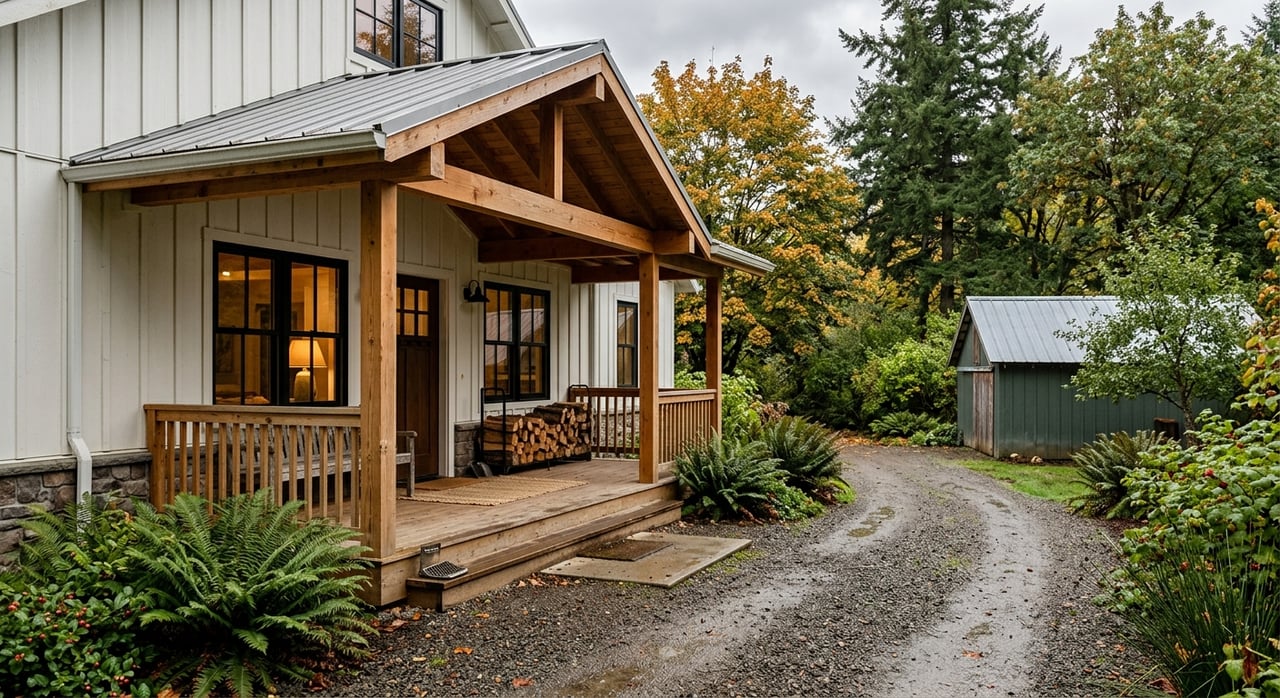
Buying a Small Farm in Canby? What to Check First
May 21, 2026
May 21, 2026
Buying a small farm near Canby can look simple at first glance. You see open land, a house, maybe a barn, and start picturing gardens, animals, or a slower pace of life. But with acreage, the real story is usually in the details, and the wrong assumption about zoning, water, or septic can get expensive fast. If you are thinking about a small farm in Canby, this guide will help you understand the key checks to make before you fall in love with a property. Let’s dive in.
Before you think about animals, outbuildings, or future plans, confirm where the property actually sits from a land-use standpoint. In Canby, that means finding out whether the parcel is inside city limits, inside the urban growth boundary, or in unincorporated Clackamas County.
That distinction matters because Canby states that the urban growth boundary marks where the city ends and farm and forest lands begin. Land outside the UGB is intended to protect farm and forest resource land and prohibit urban development. In plain terms, a property may feel close to town while still operating under very different rules.
Canby is also in a period of long-term planning, including work tied to growth and the urban growth boundary. The city says it expects to reach 25,000 people over the next 20 years. For you as a buyer, that means it is smart to think not just about what a property is today, but also about how land-use pressure may affect the area over time.
A common mistake with small farms is assuming one office handles everything. In reality, city and county roles can overlap depending on the parcel and the project.
Clackamas County notes that for partner jurisdictions, including the City of Canby, applicants should work with the city to understand land-use requirements, permits, and submittals. The county also says a buildable lot needs legal creation, proper zoning, street access, sanitary sewer or approved on-site sewage disposal, stormwater capacity, and potable water.
That is why due diligence should start early, not after you already have a remodel or building plan in mind. County staff specifically warn that failing to coordinate with Planning and Septic before applying can substantially extend review times or even lead to rejection.
Do not assume every Canby-area property works the same way. A house in town and a rural small farm may have completely different utility realities.
Inside the city, Canby Utility provides water, and the City of Canby provides sewer and stormwater service. Outside those areas, a rural property may depend on a private well and septic system instead.
That difference affects more than monthly bills. It shapes what improvements may be possible, what inspections you need, and what maintenance responsibilities you will carry after closing.
Water is one of the biggest hidden variables in any small-farm purchase. If your vision includes irrigating crops, filling stock tanks, or using surface water from a creek or pond, you need to verify what is legally allowed.
The Oregon Water Resources Department says a water-right permit or license is generally required to use water from any source in Oregon. There are exempt uses, including domestic water from a well not exceeding 15,000 gallons per day, stock watering, and emergency fire control.
That means the key question is not just, “Does the property have water?” It is also, “Can I legally use that water for the purpose I have in mind?” If your plan depends on irrigation, verify water-right status early.
If the property has a private well, treat it as a major due-diligence item. Private wells are not maintained or regulated by state or county government, so the owner is responsible for testing and maintenance.
Oregon Health Authority says Oregon requires well testing when selling a property with a well, and the seller has 90 days to send arsenic, nitrate, and total coliform results to the buyer and OHA. Even beyond a sale, OHA recommends routine testing.
You should also review the well report if one is available. OWRD keeps records for most wells drilled since 1955, and those archived reports can show the well’s depth, casing size, flow rate, and water level at the time of construction.
A well log is helpful, but it is not a live performance report. It tells you how the well was documented when built, not exactly how it performs today. That is an important distinction when you are buying acreage with water-dependent plans.
Septic systems often surprise buyers because the costs and limits are not always obvious from a listing. On a small farm, septic can affect both your immediate purchase decision and your long-term plans.
Clackamas County says a site evaluation determines whether a property is suitable for a septic absorption system and is required for most septic construction permits. The county’s 2025 fee schedule lists a residential site evaluation at $1,696 and a standard onsite system permit at $1,825 before construction costs.
The Oregon Department of Environmental Quality says changes in use, increased sewage flow, or connecting an ADU to an existing system can require an authorization notice. New systems, alterations, and repairs require a septic permit.
If a system is failing, Clackamas County says it must be repaired immediately to eliminate public health hazards. That makes septic condition a real financial and practical issue, not something to gloss over during inspections.
A five-acre property and another five-acre property can have very different farming potential. Soil, slope, drainage, and water access all shape what you can realistically do with the land.
The Natural Resources Conservation Service says the Web Soil Survey provides current soil data and maps for land-use decisions. Clackamas County also uses NRCS Web Soil Survey in parts of its EFU code to determine soil classification and rating for certain dwelling decisions.
Oregon State University Extension says soil testing is an important management practice on all farms. It recommends testing to understand nutrients, pH, and other conditions before building a farm plan.
This is where many buyers benefit from slowing down. Acreage can be visually appealing, but good due diligence means checking whether the ground supports your intended use, not just whether the lot looks productive from the driveway.
A small farm may qualify for favorable tax treatment, but that benefit depends on the land and how it is used. Clackamas County says farm and forestland deferrals can lower annual property taxes if the land qualifies, and owners should confirm the filing path with the assessor.
The Oregon Department of Revenue’s current circular uses a gross-income test of $650 for 6.5 acres or less, $100 per acre for more than 6.5 but less than 30 acres, and $3,000 for 30 acres or more. Applications are generally requested from January 1 through April 1.
There is also risk on the other side. If farmland loses special assessment, DOR says it can be reassessed at market value and may owe additional tax based on up to five years of prior benefit.
So if you are buying with plans to change use, divide land, or significantly alter how the property functions, do not treat tax status as automatic or permanent. It deserves the same attention as financing or inspections.
Many buyers assume a rural property gives them broad freedom to add a barn, shop, or pole building. Sometimes that is true, but sometimes it is only partly true.
Clackamas County says some farm, forest, or equine buildings may qualify for an agricultural building exemption under state law. That exemption can avoid a building permit, building-related inspections, and system development charges, but it only applies on farm- or forest-zoned properties and still requires land-use approval plus any other permits that apply.
The county also requires site plans showing wells, septic tanks, drainfields, driveway location, slopes, drainage features, and setbacks. So even when a structure seems straightforward, layout and site constraints can affect cost, timing, and feasibility.
If part of your plan includes a guest space, multigenerational setup, or rental-style flexibility, verify that idea early. Rules for second dwellings can be stricter than buyers expect.
Clackamas County says ADUs are allowed in some rural residential zones, but not in EFU, AG/F, or timber zones. Rural ADUs must also meet added lot, placement, and sanitation rules.
That means a property that seems perfect for a second living space may not support that use at all. If this is part of your long-term vision, make it a front-end question, not a post-closing surprise.
Before you move forward on a Canby-area small farm, make sure you have clear answers to these questions:
A small farm can be a great lifestyle move, but success usually comes from asking practical questions early. The more clearly you understand the property, the more confidently you can decide whether it truly fits your goals.
If you want experienced guidance on acreage, land, and rural property due diligence in the Canby area, Wings NW Real Estate can help you navigate the details with clarity and care.

Camas Plein Air



work with us
Ready to love where you might land next? Contact us!

19363 Willamette Dr #161 West Linn OR 97068 701 NE 136th Ave, 2nd Floor Vancouver, WA 98684